How to Start a History YouTube Channel
A beginner guide to choosing a historical niche, sourcing free archive images, writing tight scripts, and building a faceless documentary audience.

Starting a history youtube channel is one of the best ways to build a faceless audience. You do not need to show your face or buy expensive costumes. You only need a curious mind, a solid script, and public domain images.
History already has the best plot twists on earth. Kings make terrible bets, explorers get lost, and empires crumble over petty arguments. Your job is simply finding those stories and pacing them so people cannot click away.
Pick a historical angle that viewers want to click
Most beginners try to cover everything from the Big Bang to yesterday afternoon. That makes it hard for viewers to know why they should subscribe. If your first video covers Rome and your second covers Cold War submarines, nobody sticks around.
Instead, pick a specific angle that gives your channel a signature flavor. You want people to think of your channel whenever they crave that exact mood.
- Military blunders and tactical surprises
- Odd daily life in ancient cities
- Forgotten explorers and disastrous expeditions
- Royal family drama and political betrayals
- Inventions that failed before someone else succeeded
When you pick a specific lane, research becomes much faster. You start to recognize the recurring names, maps, and patterns in that era.

457,102 views on a channel with 4,370 subscribers, 104.6 times its size.
Look at Unusual History Files. Their video titled The Most Inbred Princess Ever Born gained 457,102 views on a channel with 4,370 subscribers. That is 104.6 times its channel size because it found an irresistible, specific human angle.
How to structure a history video script
A history documentary is not an encyclopedia entry. If you start with birthdates and treaty signatures, people leave within thirty seconds. You must start at the moment everything went wrong.
Drop your viewer right into the middle of the crisis. Then step back to explain how your subject ended up in that absurd situation. If you need help with structure, check our guide on how to write a YouTube script.
Focus on motives instead of dates. Nobody remembers that a battle happened in 1415, but everyone remembers that a tired king ordered his archers to stand in waist-deep mud.

197,507 views on a channel with 3,600 subscribers, 54.9 times its size.
The channel In Their Shoes used a clever personal angle in their video Your Life as Alexander the Great. It pulled 197,507 views with only 3,600 subscribers, beating their baseline by 54.9 times by putting the viewer directly in the ruler shoes.
Sourcing visuals without getting copyright strikes
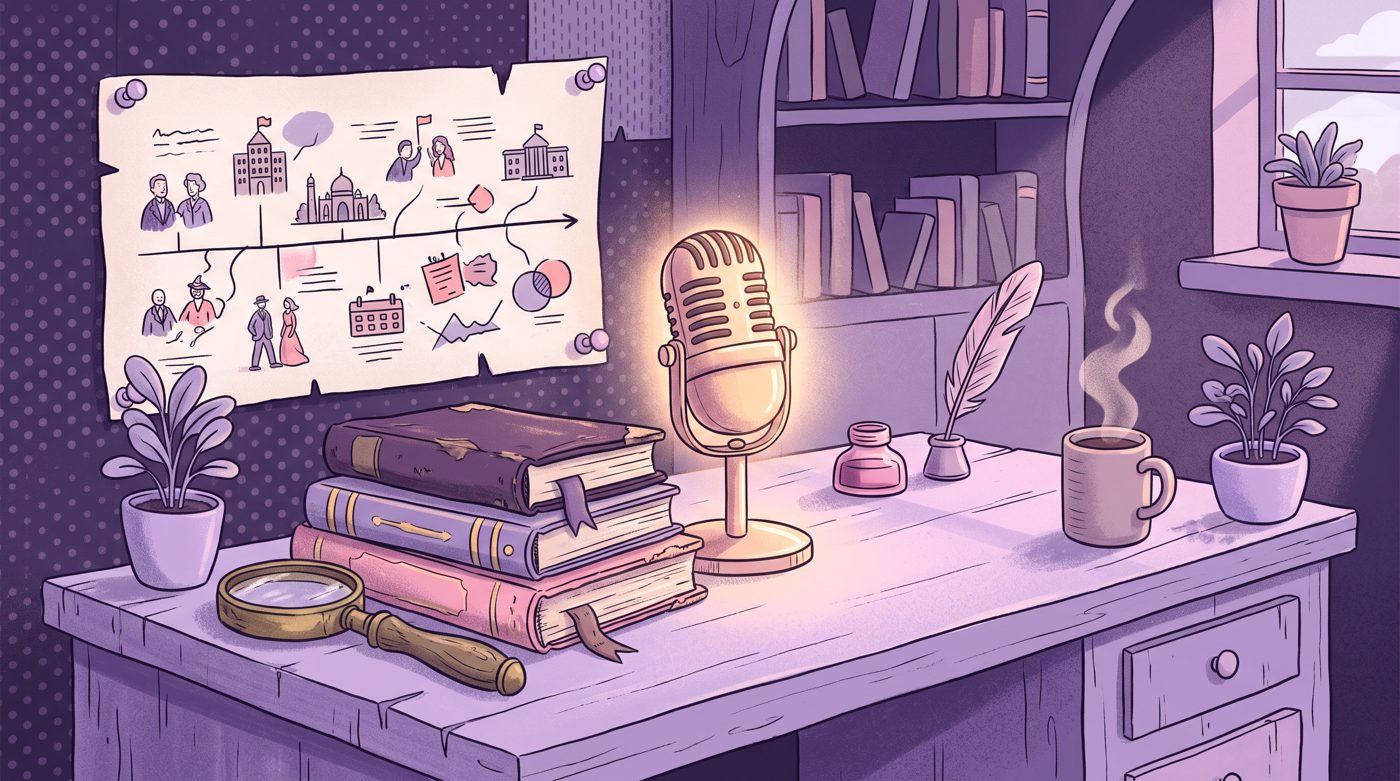
A common fear among new creators is visual copyright. The great news is that history is the easiest genre on YouTube for legal, free visuals. Works published centuries ago belong to everyone.
You do not need to steal clips from cable television documentaries. In fact, high-resolution museum scans look much more authentic and atmospheric on screen.
- Wikimedia Commons: The ultimate source for historical paintings, sketches, and battle maps.
- The Library of Congress: Incredible collections of early American photography, letters, and posters.
- National Gallery and The Met: Both offer public domain high-resolution downloads of classic paintings.
- Prelinger Archives: Miles of vintage footage from the twentieth century available for public reuse.
You will eventually spend forty-five minutes hunting down one painting of a French duke just to show it for three seconds. That is simply the tax all history creators pay.
Audio setup and narration tips for your history youtube channel
Viewers will tolerate a low-resolution painting, but they will instantly abandon muddy audio. Your voice carries the entire narrative weight of a faceless documentary.
You do not need an acoustic isolation booth. A quiet bedroom with curtains and rugs absorbs room echo surprisingly well. Put your microphone close to your mouth and speak slightly slower than your normal conversation pace.
Do not read your script like you are presenting a slide deck to a board of directors. Talk like you are telling an astonishing rumor to a friend over lunch.
Editing your documentary so viewers do not look away
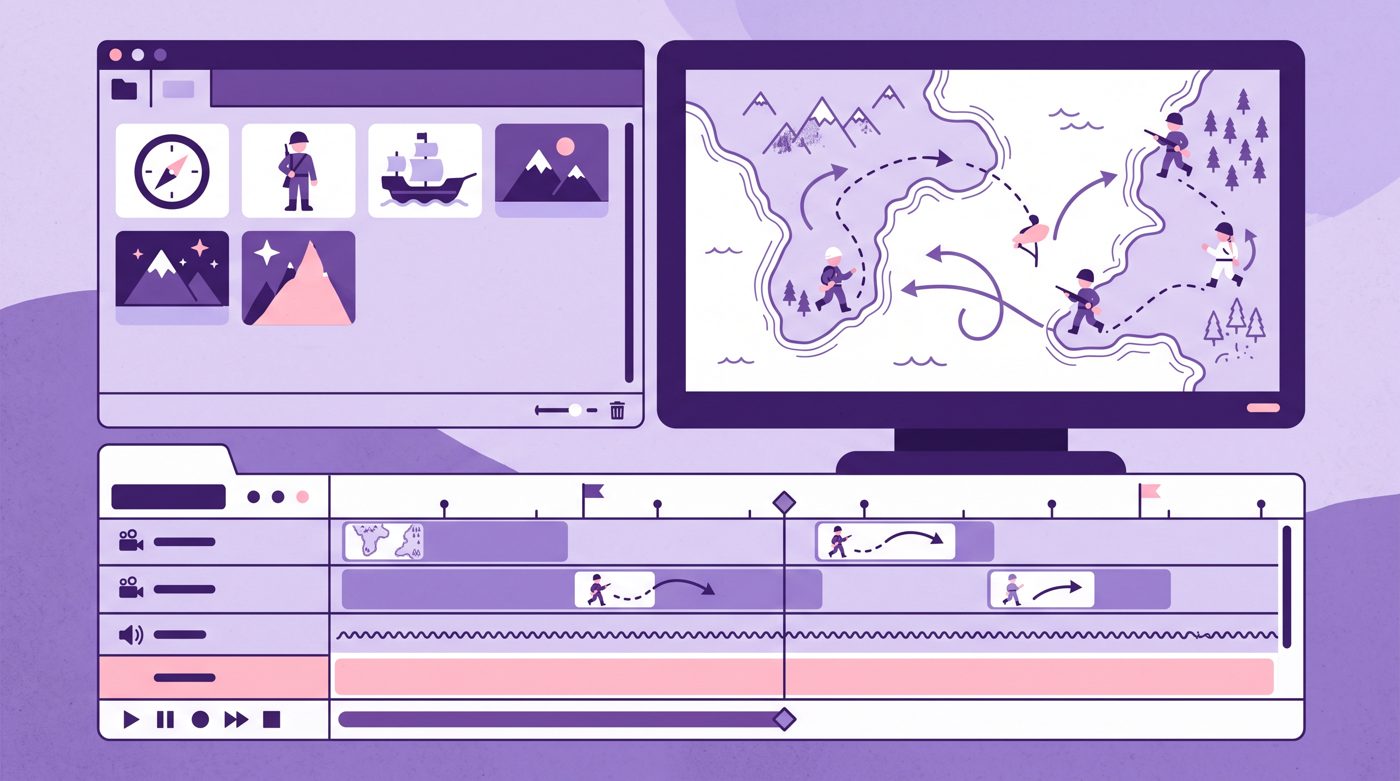
Still pictures can feel dead if you leave them flat on screen. The trick is motion. Slow zooms into faces, pans across battle lines, and gentle camera shakes keep the eye engaged.
Cut out the background of key portraits so they sit on top of antique parchment or paper textures. This simple cutout effect turns flat textbook scans into stylized animated scenes.
If building dozens of custom animated scenes sounds overwhelming, tools can lighten the load. For instance, Naravid lets you turn a written script into an illustrated or animated video automatically, saving hours of manual timeline assembly.
You can also explore other ways to present historical events. Our guide on how to start a faceless YouTube channel breaks down visual styles from whiteboard sketches to archive montage.
Your five-day launch plan
Starting is the hardest part because research can expand forever if you let it. Give yourself strict deadlines so your first video actually reaches the internet.
- Day 1: Choose one specific story and outline a three-part structure with a dramatic opening hook.
- Day 2: Write an 800 to 1,200 word script and read it aloud to trim awkward sentences.
- Day 3: Record your voiceover and collect 30 public domain paintings, maps, or photos.
- Day 4: Edit your visuals to match the audio, adding subtle zooms and quiet background music.
- Day 5: Design a high-contrast thumbnail, write a curiosity-driven title, and publish.
Your first upload will not be a masterpiece. But once it is live on your channel, you officially have skin in the game, and your second video will be twice as easy.
Useful links
- Wikimedia CommonsMassive repository of public domain artwork, historic maps, and historical photos.
- Google TrendsGreat tool to check if interest in a historical figure or war is rising or falling.
- YouTube StudioThe dashboard where you upload videos, track audience retention, and check click-through rates.
Questions people ask
Can I monetize a history channel without showing my face?
Yes. YouTube monetizes channels based on original commentary, storytelling, and production value. As long as your narration is your own and your visual assembly is transformative, faceless documentary channels easily qualify for the YouTube Partner Program.
Where can I get background music that fits history documentaries?
The free YouTube Audio Library inside YouTube Studio offers thousands of classical, cinematic, and ambient tracks that will never trigger copyright claims. You can also explore royalty-free services like Free Music Archive for atmospheric acoustic music.
How long should my first history video be?
Aim for eight to twelve minutes. That length gives you enough breathing room to tell a compelling story with rich details while remaining manageable to write, voice, and edit in your first week.